Prophetic Medicine and Modern Health: How to Read Traditional Remedies Responsibly
Prophetic medicine is an important part of Islamic tradition. It includes foods, natural products, health practices and guidance mentioned in the Quran and the teachings of Prophet Muhammad ﷺ.
Many Muslims today are interested in these traditional practices. They may want to use foods such as honey, black seed and dates as part of their daily wellness routine. Others are interested in practices such as Hijama, which is also discussed in Islamic sources.
But there is an important point to understand.
A religious reference to a food or treatment should not always be treated as the same thing as a modern medical claim.
Faith, tradition and modern medical research can be discussed together, but they answer different questions. Understanding this difference can help people respect Prophetic medicine while also making safe health choices.
What Is Prophetic Medicine?
Prophetic medicine, often called Tibb al-Nabawi, refers to health-related guidance found in Islamic sources connected with the Prophet Muhammad ﷺ.
The subject includes different types of guidance. Some relate to foods and natural products. Others relate to personal habits, cleanliness, prevention and specific health practices.
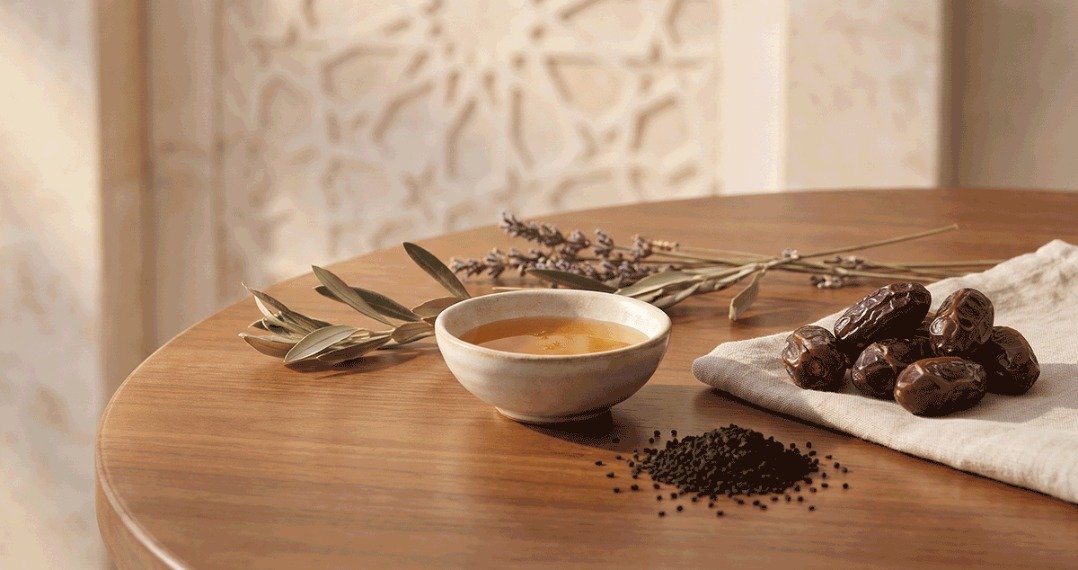
Examples often discussed in this area include:
- Honey
- Black seed
- Dates
- Cupping or Hijama
- Certain foods and dietary habits
- General guidance about health and personal care
The Quran also mentions honey. Surah An-Nahl describes honey as containing healing for people.
Hadith collections also contain reports about foods and treatments. For example, Sahih al-Bukhari records a narration about Ajwa dates, while other hadith collections contain reports about black seed and cupping.
These sources are important for understanding Islamic tradition. At the same time, modern medical research uses different methods to study whether a treatment works for a specific condition.
That difference matters.
Prophetic Medicine Is Not the Same as Modern Clinical Medicine
Modern medicine relies on clinical research, safety testing, medical guidelines and ongoing review of evidence.
A clinical study may ask questions such as:
- Does a treatment help a specific disease?
- What dose should be used?
- How often should it be used?
- What side effects can occur?
- Which people should avoid it?
- Does it work better than another treatment?
Religious texts are not written as modern clinical trial reports.
This does not make Prophetic medicine unimportant. It simply means that the two forms of knowledge should not be treated as if they use the same method.
A person can value a Prophetic practice for religious reasons while also looking at modern research before using a product to manage a health condition.
This approach allows faith and responsible health care to exist together.
Why Does This Difference Matter?
Health claims can be powerful.
If someone hears that a natural product has been mentioned in a religious source, they may assume that it can treat every modern illness.
That conclusion may go beyond what the source actually says.
It can also create a safety problem if a person uses a traditional remedy instead of seeking medical care for a serious condition.
The National Center for Complementary and Integrative Health, or NCCIH, advises people not to use complementary approaches to replace or delay needed conventional medical care. It also notes that the safety and effectiveness of many natural products are not fully known.
This is why responsible health content should avoid simple statements such as “this herb cures disease.”
A better approach is to explain what the Islamic source says, what modern research has found and what remains uncertain.
Honey in Islamic Tradition
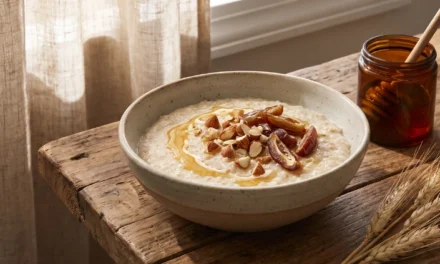
Honey is one of the most well-known natural foods linked with Islamic health traditions.
The Quran mentions honey in Surah An-Nahl 16:69 and states that there is healing in it for people.
Honey is also discussed in hadith literature.
From a modern health point of view, honey is a food with several known nutritional and biological properties. However, this does not mean that eating honey can replace medical treatment for every illness.
The way honey is used also matters.
For example, honey contains a large amount of sugar. People with certain health conditions may need to consider how much they consume as part of their overall diet.
So, when discussing honey in Prophetic medicine, it is useful to keep two ideas separate:
Islamic tradition: Honey is mentioned in the Quran and hadith.
Modern medicine: Research can study specific uses of honey, such as its role in certain wound-care settings, while other health claims may have limited or mixed evidence.
This distinction keeps the discussion accurate without dismissing either religious tradition or scientific research.
Black Seed and Prophetic Medicine
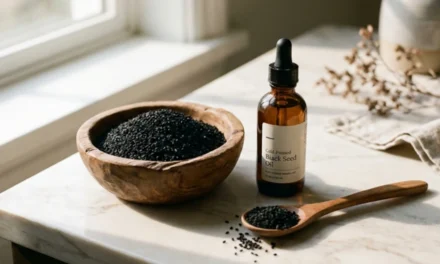
Black seed, also known as Nigella sativa, is another well-known example.
A hadith in Jami` at-Tirmidhi reports a statement about black seed and healing, with the exception of death.
Black seed contains several active compounds. One of the best-known is thymoquinone.
Modern researchers have studied black seed and its compounds for different health effects. However, evidence varies by condition, product and dose.
This is important because a traditional statement and a modern treatment claim are not automatically the same.
A person should not assume that taking black seed will treat a serious disease simply because black seed is mentioned in Prophetic tradition.
The form of the product also matters. Black seed may be consumed as whole seeds, powder, oil or a concentrated supplement. These forms do not always provide the same amount of active compounds.
People who take medicines should also consider possible interactions before using concentrated herbal products.
Dates and Traditional Wellness
Dates are another important food in Islamic culture.
Ajwa dates are specifically mentioned in hadith. Sahih al-Bukhari records a narration concerning the use of Ajwa dates and protection from poison and magic.
Dates are also a nutritious food. They provide carbohydrates, fiber and several micronutrients.
But nutrition and disease treatment are different topics.
Eating dates as part of a balanced diet can be a reasonable food choice for many people. It does not mean that dates should replace medical care when someone has an illness.
This is a useful example of how traditional food practices can fit into modern wellness without making unsupported medical promises.
What About Hijama?
Hijama, or cupping therapy, is one of the practices most often discussed under Prophetic medicine.
Hadith literature contains reports about cupping. Sahih al-Bukhari includes a narration in which cupping is mentioned among forms of treatment.
Today, cupping is also studied as a complementary health practice.
However, modern evidence is not strong enough to support broad claims that cupping can treat every condition. NCCIH notes that research on cupping has limitations and that side effects can include skin discoloration, scars, burns and infections.
This is why safety matters when discussing Hijama.
Dry cupping and wet cupping should also be understood as different procedures.
Dry Cupping
Dry cupping uses cups placed on the skin to create suction. The skin is not intentionally cut.
The treatment can leave temporary round marks. These marks usually fade over time.
Wet Cupping
Wet cupping involves suction followed by small skin incisions and another period of suction.
Because the skin is broken, hygiene and proper technique become especially important. Poor infection control can increase the risk of infection.
People should use qualified practitioners who follow suitable hygiene and safety practices.
Prophetic tradition can explain why Hijama has an important place in Islamic health discussions. Modern research can help us understand where evidence supports specific uses and where more research is needed.
Traditional Knowledge and Scientific Evidence Can Work Together
Some people think they must choose between traditional knowledge and modern science.
It does not have to be that way.
Traditional knowledge can provide historical and cultural context. Scientific research can test specific questions about safety and effectiveness.
For example, a person may choose honey because it has religious and cultural importance. They can also learn about its nutritional value and understand when medical treatment is still needed.
The same approach can be used with herbs, oils, foods and other traditional practices.
The key is to avoid making a claim stronger than the evidence allows.
How to Evaluate a Prophetic Medicine Claim
When you read a health claim online, ask a few simple questions.
1. What Is the Original Source?
Is the claim based on the Quran, a hadith, a historical medical text or a modern website?
These are not the same type of source.
If a claim comes from a hadith, check the original reference rather than relying only on a social media post.
2. What Does the Source Actually Say?
Avoid adding claims that are not present in the original text.
A statement about a food does not automatically mean that the food treats every disease.
Context matters.
3. Is There Modern Research?
Look for research from trusted medical and scientific sources.
Useful sources include PubMed, NIH, NCCIH, major medical centers and peer-reviewed journals.
Research should also be judged by its quality. A small laboratory study is not equal to a large clinical trial.
4. Is the Product Safe for Everyone?
A natural product may still cause side effects or interact with medicines.
NCCIH notes that herbal and dietary supplements can have safety concerns, including drug interactions and contamination.
Pregnant women, children, older adults and people taking regular medicines may need extra care.
5. Is the Claim Promising a Cure?
Be careful with statements such as:
“Cures all diseases.”
“Works for everyone.”
“Doctors do not want you to know this.”
“Replace your medicine with this natural remedy.”
These statements should raise concern.
Good health information explains limits instead of promising certainty.
Natural Does Not Always Mean Safe
The word “natural” can create a false sense of safety.
Plants contain active chemical compounds. Some can affect the body strongly.
NCCIH explains that natural products can have side effects and that some supplements can interact with medicines. It also notes that some products may have quality or contamination problems.
The dose also matters.
A person may safely eat a food as part of a normal diet but react differently to a highly concentrated extract.
For this reason, whole foods, traditional preparations and concentrated supplements should not always be treated as identical.
Should Prophetic Medicine Replace Modern Medical Treatment?
No general rule supports replacing needed medical care with traditional remedies.
A person can follow Prophetic practices as part of their faith and personal wellness while still seeking medical advice when needed.
If someone has ongoing symptoms, severe pain, breathing problems, chest pain, unexplained weight loss, serious infection or another worrying symptom, professional medical assessment is important.
The goal should be responsible care, not an either-or choice between faith and medicine.
A Balanced Way to Approach Prophetic Medicine
A balanced approach can be simple.
Respect the tradition.
Understand the Quranic verses and hadith that relate to health practices.
Check the evidence.
Look for good-quality modern research before making medical claims.
Think about safety.
Consider allergies, medicines, health conditions, age and pregnancy.
Do not exaggerate.
A traditional remedy should not be presented as a guaranteed cure.
Seek medical care when needed.
Traditional wellness should not delay diagnosis or treatment of serious health problems.
This approach is especially useful in the modern online world, where health claims can spread quickly without proper sources.
Frequently Asked Questions
What is Prophetic medicine?
Prophetic medicine, or Tibb al-Nabawi, refers to health-related guidance found in Islamic sources connected with the Prophet Muhammad ﷺ. It includes references to foods, natural products and certain health practices.
Is Prophetic medicine the same as modern medicine?
No. Prophetic medicine is rooted in Islamic religious tradition, while modern medicine relies on scientific research, clinical evidence and medical practice. The two can be discussed together, but they should not be treated as the same system.
Are honey and black seed part of Prophetic medicine?
Yes. Both honey and black seed are mentioned in Islamic sources. The Quran mentions honey, while hadith literature includes reports about black seed.
Can Prophetic medicine cure every disease?
It is not responsible to make a general claim that a traditional remedy can cure every modern disease. Each health condition needs to be considered on its own, along with the available evidence and the person’s health needs.
Is Hijama part of Prophetic medicine?
Yes. Cupping is mentioned in hadith literature and has an important place in discussions of Prophetic medicine. Modern research also studies cupping as a complementary practice.
Can I use herbal remedies while taking prescription medicine?
Some herbs and supplements can interact with medicines. If you take prescription or regular over-the-counter medicine, speak with a doctor or pharmacist before starting a new herbal supplement.
Final Thoughts
Prophetic medicine remains an important subject for Muslims who want to understand the relationship between faith, traditional health practices and personal wellness.
The best approach is neither to dismiss traditional knowledge nor to make medical claims without evidence.
Instead, look at each practice carefully.
Understand its Islamic source. Learn what modern research says. Consider safety. Know the limits of the evidence. And seek professional medical care when a health problem needs proper diagnosis or treatment.
This approach allows traditional wisdom and modern health knowledge to be discussed with respect, honesty and care.
Health Disclaimer
This article is for general educational purposes only. It does not diagnose, treat or cure any medical condition and should not replace advice from a qualified healthcare professional. Religious references in this article are presented for educational context and should not be treated as individual medical instructions. If you have a medical condition or take regular medicines, speak with a qualified healthcare professional before starting a new treatment, supplement or herbal product.