Herbal Remedies and Prescription Medicines: Why Natural Does Not Always Mean Safe
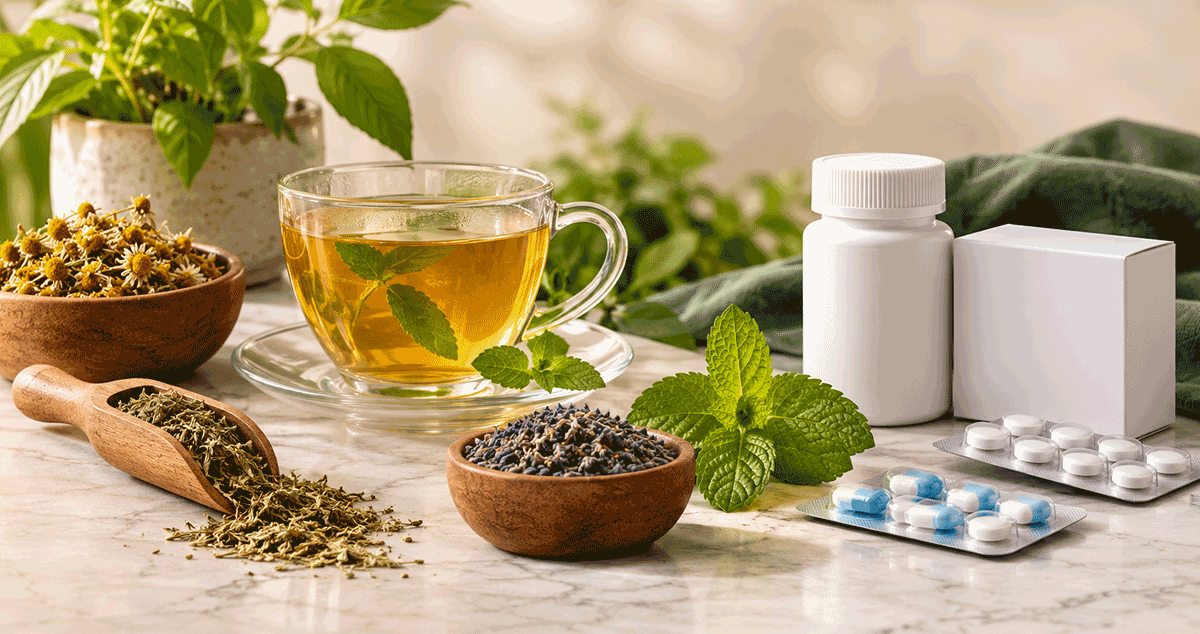
Many people choose herbal remedies because they seem natural, traditional and gentle. It is common to think of herbs as a safer alternative to conventional medicine, especially when a product has been used for generations.
But “natural” does not always mean risk-free.
Herbs contain active substances that can affect the body. Some of these substances may also affect the way prescription medicines or over-the-counter medicines work. In some cases, an herbal product may increase the effect of a medicine. In other cases, it may reduce the medicine’s effectiveness. Some interactions can also increase the risk of side effects. (nccih.nih.gov)
This does not mean that all herbal remedies are dangerous. It means they should be treated with the same level of care as other products that can affect the body.
Understanding how herb and medicine interactions happen can help you make better decisions and have more informed conversations with your doctor or pharmacist.
Why Can Herbs Interact With Medicines?
The body processes medicines through several systems, including the liver, intestines, kidneys and bloodstream.
Some herbs can influence these processes.
For example, an herb may affect how quickly the body breaks down a medicine. If a medicine is broken down more quickly than expected, its level in the body may decrease. This could make the medicine less effective.
The opposite can also happen. If an herb slows the breakdown of a medicine, the medicine may remain in the body for longer or reach a higher level than intended. This can increase the chance of unwanted effects.
Herbs can also have effects of their own. An herb with a sedating effect, for example, may potentially add to the effects of another medicine that causes drowsiness.
The National Center for Complementary and Integrative Health, or NCCIH, notes that interactions can occur between prescription medicines, over-the-counter medicines, dietary supplements and substances found in foods. (nccih.nih.gov)
Natural Does Not Mean Pharmacologically Inactive
One of the biggest misunderstandings about herbal products is the idea that a natural substance cannot have a strong effect on the body.
In reality, plants contain many naturally occurring chemical compounds. Some have biological effects that can be useful, while others may cause unwanted effects depending on the dose, preparation and individual.
Modern medicines themselves often originate from compounds found in nature. The fact that something comes from a plant does not tell us whether it is safe, effective or appropriate for a particular person.
This is why herbal products should not automatically be placed into a category of “safe” simply because they are natural.
The same principle applies to food-based remedies and concentrated supplements. A substance used in a normal dietary amount may not have the same effect when it is taken as a concentrated extract or supplement.
Prescription Medicines and Herbal Supplements Are Not Always a Simple Combination
Some people take herbal supplements without mentioning them to their healthcare provider.
This can happen because they do not think of supplements as medicines.
However, healthcare professionals need to know about all the products you use. This includes prescription medicines, over-the-counter medicines, vitamins, minerals, herbal supplements and other dietary products.
NCCIH recommends telling healthcare providers about all supplements and medicines you take and keeping a written list that includes the product, dose and frequency. (nccih.nih.gov)
This information can help a doctor or pharmacist identify possible interactions before they become a problem.
Some Well-Known Examples of Herb-Drug Interactions
Not every herb has been studied equally well. For some herbal products, there is strong evidence of specific interactions. For others, available information is limited or based mainly on laboratory or animal research.
St. John’s Wort
St. John’s wort is one of the best-known examples.
It can affect enzymes and transport systems involved in how the body handles medicines. NCCIH reports that it can interact with many types of drugs and may reduce the effects of some medicines. It can also contribute to serious side effects with certain antidepressants. (nccih.nih.gov)
This is a good example of why an herbal product should not be assumed to be harmless simply because it is sold as a natural supplement.
Asian Ginseng
Asian ginseng is another herb for which possible medicine interactions have been studied.
NCCIH notes uncertainty about potential interactions with certain blood pressure medicines, statins and some antidepressants. (nccih.nih.gov)
The available evidence is not equally strong for every possible combination, so people taking regular medication should discuss supplement use with a healthcare professional.
Green Tea Extracts
Green tea as a beverage is different from concentrated green tea supplements.
NCCIH notes that concentrated green tea supplements can affect blood levels of certain medicines, including atorvastatin and nadolol. (nccih.nih.gov)
This is an important reminder that the form and concentration of a botanical product can matter.
Why Concentration and Preparation Matter
The way an herb is prepared can change what a person consumes.
A traditional tea, a powdered herb, a tincture, an oil and a concentrated extract may contain very different amounts of active compounds.
This means it is not always appropriate to assume that an herb used traditionally in food or tea will have exactly the same effect when taken as a concentrated supplement.
The dose also matters.
A product containing an herb in a concentrated form may deliver a much larger amount of certain compounds than someone would normally consume through food.
For this reason, when evaluating an herbal product, it is useful to consider more than the plant name. Look at the form, concentration, serving size and complete ingredient list.
Who Should Be Especially Careful?
Anyone taking regular medication should consider possible interactions before starting an herbal supplement.
Extra care may be appropriate for people taking medicines with a narrow therapeutic range. These are medicines where relatively small changes in the amount of drug in the body can have important effects.
NCCIH specifically highlights medicines such as warfarin, digoxin and cyclosporine as examples where potential interactions deserve particular attention. (nccih.nih.gov)
People with complex medical conditions or those taking several medicines may also have more potential for interactions.
If you are unsure, the safest approach is to ask a qualified healthcare professional before adding a new supplement.
What About Over-the-Counter Medicines?
Herbal products can potentially interact with medicines that do not require a prescription as well.
This is sometimes overlooked because people think of interactions as a problem involving prescription drugs only.
NCCIH notes that some herbal supplements may interact with over-the-counter medicines as well. For example, certain supplements can affect the effectiveness of medicines used for allergies or other common conditions. (nccih.nih.gov)
That is why it is useful to tell your pharmacist or doctor about all supplements you use, even if the medicine itself was purchased without a prescription.
What About Traditional Herbal Remedies?
Traditional use can provide valuable knowledge about how plants have been used across cultures for generations.
However, traditional use and clinical evidence are not exactly the same thing.
An herb may have a long history of traditional use, but that alone does not prove that it is effective for a specific medical condition or that it is safe for everyone.
Modern research may support some traditional uses, question others or show that more evidence is needed.
A balanced approach respects traditional knowledge while also asking what scientific research actually tells us.
This is particularly important when an herbal remedy is being used alongside modern medical treatment.
How to Use Herbal Remedies More Responsibly
You do not need to avoid every herbal product to use herbs responsibly.
Instead, make informed choices.
Tell Your Healthcare Provider
Before starting a concentrated herbal supplement, tell your doctor or pharmacist what you are considering.
This is particularly important if you already take prescription medicines.
Keep a Complete Product List
Write down the names of your medicines and supplements, including the amount and how often you take them.
Bring this list to medical appointments when appropriate.
Read the Label
Check the full ingredient list rather than focusing only on the main herb mentioned on the front of the package.
Some products contain several herbs or additional ingredients.
Avoid Assuming More Is Better
Increasing the amount of an herbal supplement does not automatically make it more effective.
Higher doses may also increase the chance of unwanted effects.
Be Careful With Multiple Supplements
Taking several supplements at the same time can make it harder to identify what is causing an unexpected reaction.
If you use multiple products, discuss them with a healthcare professional.
Choose Products Carefully
Quality can vary between supplements. Contamination and inaccurate labeling are among the safety concerns associated with some dietary supplements. (nccih.nih.gov)
Where possible, choose products from reputable manufacturers and check the label carefully.
Should You Stop Your Prescription Medicine if You Want to Try an Herb?
No.
Do not stop or change a prescribed medicine simply because you want to use an herbal product.
If you are interested in adding an herb or supplement, speak with the healthcare professional who manages your treatment.
A doctor or pharmacist can help you understand whether there is a known interaction and whether any monitoring may be needed.
Stopping a prescription medicine without medical guidance can itself create health risks.
What If There Is Not Enough Research?
This is one of the most important questions in herbal wellness.
Sometimes there is simply not enough evidence to know whether two products interact.
That does not necessarily mean that an interaction exists. It also does not prove that there is no risk.
NCCIH notes that information about many herb-drug interactions is limited, and some reported interactions are based on laboratory studies, animal research or indirect evidence rather than well-designed clinical trials. (nccih.nih.gov)
When evidence is uncertain, caution is more appropriate than making a confident claim.
This is especially important for medicines where small changes in drug levels can have serious consequences.
Frequently Asked Questions
Can herbal remedies interact with prescription medicines?
Yes. Some herbs and herbal supplements can change how medicines work, potentially increasing or decreasing their effects. However, the risk varies greatly depending on the specific herb, medicine, dose and individual. (nccih.nih.gov)
Are herbal remedies safer than prescription medicines?
Not automatically. Herbal products can contain active compounds and may have side effects or interact with medicines. “Natural” should not be treated as another word for “risk-free.”
Should I tell my doctor about herbal supplements?
Yes. Tell your doctor, pharmacist or other qualified healthcare provider about the supplements and herbal products you use, particularly if you take prescription medicines. (nccih.nih.gov)
Can herbal tea interact with medicine?
It depends on the herb, amount and medicine. Concentrated extracts and supplements may provide much higher amounts of certain compounds than a normal food or beverage. If you take regular medication, ask a healthcare professional about specific herbs.
Is it safe to take several herbal supplements together?
There is no universal answer. Combining several supplements can increase uncertainty because each product may contain multiple active ingredients. It is better to review the complete list with a healthcare professional.
Can I replace my prescription medicine with an herbal remedy?
You should not replace a prescribed medicine without medical advice. If you are interested in an herbal approach, discuss it with your doctor or pharmacist before changing your treatment.
Final Thoughts
Herbal wellness and modern medicine do not have to be viewed as opposites.
Many people use herbs as part of their cultural traditions, diet or personal wellness routines. The important part is understanding that herbs can contain biologically active compounds and may interact with medicines.
The safest approach is not to fear every herbal product, but to use good judgment.
Know what you are taking. Read the label. Pay attention to the dose and preparation. Keep your healthcare provider informed, especially when you take prescription or over-the-counter medicines.
Most importantly, do not assume that a product is automatically safe because it is natural.
Traditional knowledge can be valuable, while modern research can help us understand where the evidence is strong, where it is uncertain and where more study is needed. Combining both perspectives can lead to a more thoughtful and responsible approach to herbal wellness.
Health Disclaimer
This article is for general educational purposes only. It does not diagnose, treat or cure any medical condition and should not replace advice from a qualified healthcare professional. If you take prescription or over-the-counter medicines, speak with your doctor or pharmacist before starting a new herbal supplement.