The Skin Microbiome: The Hidden Ecosystem Behind Healthy Skin
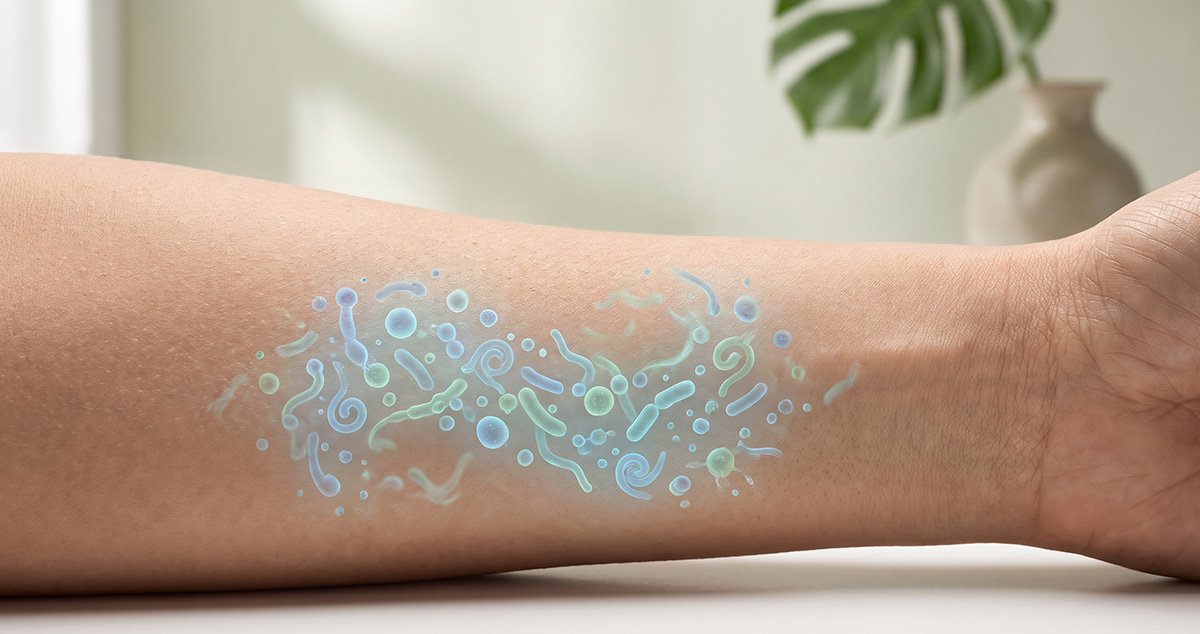
Healthy skin is more than what we see in the mirror. Beneath the surface of your daily skincare routine, the skin is home to a living community of microorganisms that interact with the skin and its natural defenses. This community is known as the skin microbiome.
The word “microbiome” can sound technical, but the basic idea is simple. Your skin is not a sterile surface. It has its own small ecosystem made up of bacteria, fungi, viruses and other microorganisms. Many of these organisms live with us without causing harm. Some may even help the skin maintain its natural defenses.
Research into the skin microbiome has grown rapidly in recent years. Scientists are studying how these microorganisms interact with the skin barrier, immune system and surrounding environment. Current evidence suggests that the relationship between the microbiome and the skin barrier is complex and important for maintaining healthy skin.
Understanding this relationship can also change the way we think about skincare. Instead of trying to remove everything from the skin, the goal is often to support a healthy balance.
What Is the Skin Microbiome?
The skin microbiome is the community of microorganisms that live on and around the skin. These include bacteria, fungi and viruses, along with other microscopic organisms.
The exact makeup of the microbiome is not the same for everyone. It can vary from one person to another and can also differ between areas of the body. The forehead, scalp, face, hands and other areas have different environments, which means they can support different microbial communities.
Your age, genetics, environment, skin condition, lifestyle and the products you use can all influence this ecosystem.
This does not mean that every microorganism on the skin is beneficial. Some microorganisms can contribute to problems under certain conditions. The important point is that the skin microbiome exists as a dynamic ecosystem. Its relationship with the body depends on balance, location and the condition of the skin.
Why Does the Skin Have a Microbiome?
The skin is one of the body’s main protective barriers. It separates the inside of the body from the outside environment and is constantly exposed to air, pollution, temperature changes, chemicals and microorganisms.
The skin barrier works through several connected systems. These include physical structures, chemical conditions, immune responses and interactions with resident microorganisms.
The microorganisms living on the skin can interact with the skin’s immune system and with other microbes. Some resident microbes can also compete with potentially harmful microorganisms for space and resources. This is one reason researchers consider the skin microbiome an important part of the skin’s natural defense system.
However, it is important not to oversimplify this relationship. The skin microbiome is not simply a collection of “good bacteria.” It is a complex ecosystem, and scientists are still learning how individual microorganisms and their interactions affect different skin types and conditions.
How Does the Skin Microbiome Support Skin Health?
One of the most important areas of research is the connection between the microbiome and the skin barrier.
The skin barrier helps reduce water loss and protects the body from external substances. The outermost layer of the skin contains lipids and other structures that help maintain this protective function. The microbiome interacts with these systems in physical, chemical and immune-related ways.
The microbiome may also help the skin respond to microorganisms that could potentially cause infection. Resident microbes can compete with unwanted organisms and interact with the skin’s immune defenses.
Recent reviews describe the skin microbiome as an important part of skin homeostasis, including barrier integrity, immune regulation and protection against pathogens.
At the same time, researchers are still investigating exactly how these processes work in different people. This is why it is better to talk about the microbiome as one part of a larger skin system rather than presenting it as a single solution for every skin problem.
The Connection Between the Skin Barrier and the Microbiome
The skin barrier and microbiome have a close relationship.
A healthy skin barrier creates an environment in which resident microorganisms can live. At the same time, the microorganisms on the skin can influence barrier function and the local immune environment.
Skin also has a naturally acidic surface environment. This is often referred to as the skin’s acid mantle. Skin pH can influence barrier processes and the microorganisms that live on the surface. Research has shown that maintaining the right skin environment is important for both barrier function and microbial balance.
This relationship works in both directions. When the skin barrier becomes disrupted, the microbial environment can also change. Likewise, changes in the microbiome may be associated with changes in barrier function and inflammation.
Researchers have studied these relationships in conditions such as acne, atopic dermatitis and psoriasis. However, an association does not automatically mean that microbiome changes are the sole cause of a skin condition. Skin health is influenced by many factors, including genetics, immune responses, environment and lifestyle.
What Can Disrupt the Skin Microbiome?
The skin microbiome is constantly adapting to its environment. Some everyday habits may influence this balance.
Over-Cleansing
Cleansing is an important part of personal hygiene, but more cleansing is not always better. Frequent or harsh cleansing can affect the skin’s surface environment and may contribute to dryness or barrier disruption in some people.
The goal should be to clean the skin effectively without unnecessarily stripping it.
Excessive Exfoliation
Exfoliation can remove dead skin cells, but excessive exfoliation may irritate the skin and weaken its protective barrier.
If your skin feels tight, burning, unusually dry or irritated after exfoliation, that may be a sign that your routine needs to be simplified.
Harsh Skincare Products
Strong products can be useful for certain skin concerns when used appropriately. However, using multiple active products without understanding how they interact can place unnecessary stress on the skin.
A simple routine is often easier to manage than a long list of products.
Environmental Stress
Sun exposure, pollution, humidity, temperature changes and other environmental factors can affect the skin barrier and its microbial environment. The relationship between these factors and the microbiome is still an active area of research.
How Can You Support a Healthy Skin Microbiome?
You do not need a complicated “microbiome routine” to care for your skin.
Start with the basics.
1. Keep Your Routine Simple
Choose skincare products based on your skin’s needs rather than following every new trend. A basic routine can include gentle cleansing, appropriate moisturization and daily sun protection.
2. Avoid Unnecessary Over-Exfoliation
If your skin is already irritated or dry, adding more exfoliating products may not be helpful. Give the skin time to recover before adding more active ingredients.
3. Protect the Skin Barrier
Moisturizing can help support the skin barrier, especially when the skin is dry. Look for products that suit your skin type and do not cause irritation.
For readers interested in natural personal-care products, you can also explore the wider skincare and hair-care range available from AL-SARIH. Always choose products according to your own skin needs and check the ingredient information before use.
4. Pay Attention to How Your Skin Responds
Your skin can tell you a lot. Persistent redness, burning, severe dryness or irritation should not simply be ignored.
Instead of constantly adding new products, consider simplifying your routine and identifying what may be causing the reaction.
5. Be Careful With “Microbiome-Friendly” Claims
The growing interest in the skin microbiome has also created a new market for products described as microbiome-friendly, probiotic, prebiotic or postbiotic.
Some of these approaches are being actively researched, but the science is still developing. A product carrying a microbiome-related label is not automatically proven to improve everyone’s skin.
Recent reviews note that formulation, ingredients, concentration and product pH can all influence the skin’s microbial environment.
Can Natural Skincare Affect the Skin Microbiome?
Natural skincare is becoming increasingly popular, but “natural” does not automatically mean better for every skin type.
Plant oils, botanical extracts and other natural ingredients can have useful cosmetic properties. At the same time, any ingredient can potentially cause irritation or sensitivity in some people.
The effect of a product depends on the ingredient, concentration, formulation, pH and the individual using it. This is especially important when discussing the skin microbiome because research is still developing around how different cosmetic ingredients affect microbial communities.
For this reason, natural skincare should be approached with the same care as any other skincare routine.
Common Skin Microbiome Mistakes to Avoid
A few simple mistakes can make skincare more complicated than it needs to be.
Trying to sterilize the skin: Healthy skin is not supposed to be completely free of microorganisms.
Changing products too often: Constantly switching products makes it difficult to understand what your skin actually responds to.
Over-exfoliating: More exfoliation does not always mean healthier-looking skin.
Following every skincare trend: New ingredients and microbiome claims should be evaluated carefully rather than accepted at face value.
Ignoring persistent irritation: Ongoing redness, pain, swelling or significant skin changes may require professional medical advice.
Frequently Asked Questions
Is the skin microbiome the same for everyone?
No. The skin microbiome varies between people and can also differ across different parts of the same person’s body. Genetics, environment, age, skin conditions and other factors can influence it.
Does washing your face destroy the skin microbiome?
Normal cleansing does not mean that the entire microbiome is destroyed. However, harsh or excessive cleansing can affect the skin’s surface environment and may contribute to barrier disruption. The best approach depends on the individual and their skin type.
Can the skin microbiome affect the skin barrier?
Yes. Research shows a close relationship between the microbiome and the skin barrier. Microorganisms can interact with physical, chemical and immune components of the skin barrier.
Should I buy products labeled “microbiome-friendly”?
Not necessarily. These products may use interesting approaches, but microbiome-focused skincare is still an evolving area of research. Look at the complete formulation and consider whether the product actually suits your skin.
Can natural skincare support the skin microbiome?
Some natural ingredients may interact with the skin environment, but there is no universal natural ingredient that can guarantee a healthier microbiome. Product formulation and individual skin response matter.
When should I see a dermatologist?
If you have persistent irritation, unexplained rashes, significant inflammation, worsening acne or another ongoing skin concern, it is better to speak with a qualified healthcare professional rather than relying only on home skincare methods.
Final Thoughts
The skin microbiome is a fascinating part of human biology, but it is not something that needs to be “fixed” every time you experience a change in your skin.
The better approach is to think about the skin as a living system. Its barrier, microorganisms, immune responses and environment all work together. Supporting that system usually starts with simple habits: gentle cleansing, sensible exfoliation, adequate moisturization, sun protection and avoiding unnecessary irritation.
Research into the skin microbiome is still developing, and new discoveries may change how we understand microbiome-focused skincare in the future. For now, the strongest approach is to keep skincare practical, evidence-aware and suited to your individual needs.
Health Disclaimer
This article is provided for general educational purposes only. It is not intended to diagnose, treat or cure any medical condition. If you have a persistent or concerning skin problem, consult a qualified dermatologist or healthcare professional.