
Wet Cupping (Hijama) vs. Dry Cupping: What’s the Difference?
You’ve seen the photos. Maybe it was an Olympic swimmer with purple circles covering their shoulders, or perhaps a wellness influencer touting their latest “detox” session. You’re interested, but then you hear the details: suction cups, strange marks, and sometimes, blood. That’s usually where the confusion sets in.
If you are trying to understand Wet Cupping (Hijama) vs. Dry Cupping and what’s the difference between them, you need to cut through the noise. These aren’t just two flavors of the same thing; they are fundamentally different procedures with distinct goals, intensities, and risk profiles.
Let’s be real putting vacuum cups on your skin seems weird if you’ve never done it. And the idea of voluntarily letting someone make tiny incisions on your back sounds even weirder to many westerners. But these therapies have survived for thousands of years across Egyptian, Chinese, and Middle Eastern cultures for a reason. They do something.
The goal here isn’t to sell you on cupping. It’s to give you the unfiltered reality so you can figure out if either of these ancient bio-hacks belongs in your modern wellness routine. Let’s break it down.
The Core Concept: Reverse Massage
Before diving into the blood versus no-blood debate, you need to understand the mechanism they share.
Both wet and dry cupping rely on negative pressure. A typical massage applies positive pressure pushing into tissue to break up knots. Cupping does the opposite. By creating a vacuum inside a cup placed on the skin, it lifts the soft tissue.
This suction pulls skin, muscle, and fascia upward. The theory is that this decompresses tight areas, increases blood flow to specific zones, and triggers a localized healing response. The visible result of this suction is ecchymosis those famous circular bruises. They aren’t bruises in the traditional sense of trauma; they are fluid and blood brought to the surface by the vacuum.
That suction is the shared foundation. Where they go from there is what separates the two distinct paths.
Dry Cupping: The Gateway Therapy
Dry cupping is the version you most likely saw on TV during the Olympics. It is suction, and suction only.
How It Works
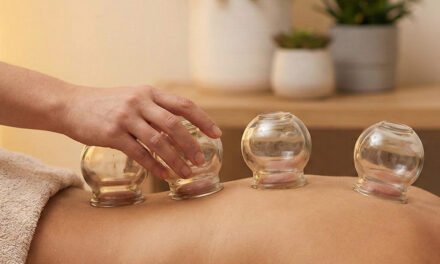
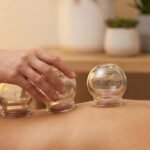
A practitioner places cups usually glass, plastic, or silicone on your skin. They create a vacuum, either by using a pump (common in modern clinics) or by briefly introducing fire to a glass cup to consume the oxygen before placing it rapidly on the skin (fire cupping).
The cups sit there for anywhere from five to fifteen minutes. You feel tight pulling sensation. Your skin turns red, then purple. Then the cups come off. That’s it.
There are variations here. Sometimes the cups are left stationary (static cupping). Sometimes the therapist applies oil first and slides the suctioned cups around your back (sliding cupping), which feels like an incredibly intense, deep-tissue massage.
The Goal of Dry Cupping
The primary goal here is structural and circulatory. Think of it as targeting musculoskeletal issues.
-
Increasing Circulation: It forces fresh blood into areas that might be ischemic (lacking blood flow) due to chronic tightness.
-
Myofascial Release: The suction physically lifts fascia (the connective tissue covering muscles) away from the underlying muscle, potentially releasing adhesions that cause pain and restricted movement.
-
Trigger Point Therapy: It’s excellent for releasing specific knots in shoulders and backs.
It’s intense, but it’s generally non-invasive in the sense that your skin remains intact.
Wet Cupping (Hijama): The Deep Clean
Now we enter different territory. Wet cupping, widely known in the Islamic world as Hijama (from the Arabic root al-hajm, meaning “sucking”), involves a crucial second step: controlled bloodletting.
This isn’t medieval doctors draining pints of blood to balance your humors. It’s a superficial, capillary-level procedure.
How It Works
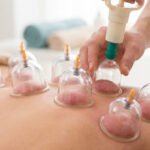
The process starts exactly like dry cupping. Cups are placed, suction is applied, and the area is numbed by the pressure for about three to five minutes.
Here is the pivot point. The practitioner removes the cups. The area under the cup will look raised and red. Using a sterile, single-use surgical blade, they make enormous numbers of tiny, shallow incisions (scratches, really) on that raised skin.
The cups are placed back on top of these scratches, and suction is reapplied. The vacuum now draws out a small quantity of blood usually thick, dark, and sometimes gelatinous through those incisions. This second suction lasts another few minutes before the area is cleaned and dressed.
The Goal of Hijama
While dry cupping is about moving things around, wet cupping is about getting things out.
In traditional medicine frameworks (Traditional Chinese Medicine and Unani/Islamic medicine), the theory is that pain and disease are caused by stagnation blood and energy that isn’t flowing right. Hijama aims to physically remove this “stagnant” or “toxic” blood, along with inflammatory mediators and metabolic waste products that have accumulated in certain areas.
Modern biomedical perspectives are still catching up, but theories suggest that the controlled trauma of the incisions, combined with the suction, kickstarts a massive, systemic immune response and acts as a form of pain-gate control.
Wet Cupping (Hijama) vs. Dry Cupping: What’s the Difference?
If you’ve skimmed until now, pay attention here. This is the crux of the issue when comparing Wet Cupping (Hijama) vs. Dry Cupping. The difference isn’t subtle; it’s systemic.
1. The Involvement of Blood
This is obvious, but it has massive implications. Dry cupping is a closed system; everything stays inside your body. Wet cupping is an open system; bodily fluids leave the body. This changes everything regarding safety protocols, practitioner qualifications, and recovery.
2. The Intensity and Recovery
Dry cupping leaves you with marks that look like an octopus attacked you. They are tender for a day or two and fade in a week. You can usually go right back to the gym.
Wet cupping involves actual wounds. They are superficial scratches, but they are wounds nonetheless. The recovery is longer. The area needs to be kept clean and dry for at least 24-48 hours to prevent infection. It’s a minor surgical procedure, and your body needs energy to heal those incisions. You will likely feel tired afterward.
3. The Scope of Treatment
Here’s the thing: Dry cupping is mostly physical. It’s great for a tight trap muscle from sitting at a desk or a strained hamstring.
Wet cupping is used for systemic issues. People seek it out not just for back pain, but for migraines, hypertension, autoimmune conditions, fertility issues, and general detoxification. The belief is that by removing the “bad blood,” you are resetting the body’s internal environment.
4. The Cultural and Spiritual Dimension
You cannot separate wet cupping from its cultural context, particularly Hijama in Islam. It is considered a prophetic medicine Sunnah practice (a tradition of the Prophet Muhammad). For many Muslims, it is both a physical therapy and a spiritual act of healing. Dry cupping generally lacks this religious dimension.
The Pain Question: Let’s Be Honest
Does it hurt? Yes and no.
Dry Cupping: The initial suction feels very tight, sometimes bordering on a pinching sensation. If the therapist uses strong suction on a very tight area, it can be uncomfortable during the process. The aftermath feels like post-workout muscle soreness.
Wet Cupping: Surprisingly, the incisions usually don’t hurt much. The initial dry cupping step numbs the area significantly. Most people describe the incisions as feeling like light scratches or pricks. The second suction, drawing out the blood, can feel strange, but rarely painful.
If you have a low pain threshold, fire cupping (a type of dry cupping) might actually feel more intense due to the heat and rapid suction than the full wet cupping procedure.
The Critical Importance of Safety
If you take one thing away from this, let it be this section.
With dry cupping, the risks are low. You might get a blister if the cup is left on too long, or a mild burn if fire is used carelessly. It’s generally very safe.
With wet cupping, the stakes are vastly higher. Because blood is drawn, there is a risk of blood-borne pathogen transmission (like Hepatitis or HIV) if equipment isn’t sterile.
If you opt for wet cupping, you must demand:
-
Single-use everything: Cups, blades, and gloves must be brand new, opened in front of you, and disposed of immediately as medical waste. Never, ever let someone reuse a cup on you for Hijama, even if they say they washed it.
-
A Clinical Setting: This shouldn’t happen on someone’s living room couch. It needs to be done in a clean environment by a trained professional who understands cross-contamination protocols.
Making the Choice
So, when you weigh Wet Cupping (Hijama) vs. Dry Cupping and what’s the difference, which one wins? Neither. They are tools for different jobs.
Choose Dry Cupping if:
-
You are an athlete needing recovery from muscle tightness.
-
You have specific musculoskeletal pain (neck, back, shoulders).
-
You are squeamish about blood or needles.
-
You want a lower-risk, lower-intensity introduction to cupping therapy.
Choose Wet Cupping (Hijama) if:
-
You are looking for a deeper, systemic detoxification approach.
-
You seek relief from chronic conditions like migraines or autoimmune issues (in conjunction with your doctor’s advice).
-
You are drawn to the traditional or spiritual aspects of the practice.
-
You are prepared to vet your practitioner aggressively for safety standards.
Holistic health is about finding the right combination of therapies for your body. Sometimes that means deep suction to release muscle tension, and sometimes it means deeper interventions. Furthermore, supporting your body with high-quality external products can complement these therapies. For example, those focused on natural wellness regimens often explore products like Nature’s Crown Hair Oil as part of their broader self-care routines.
FAQs
How long do the marks last?
For both types, the circular marks usually last anywhere from 3 days to two weeks depending on how dark they are and your body’s healing speed.
Can I do dry cupping on myself?
Yes, you can buy silicone cups and use them on accessible areas like your legs or arms. Don’t try fire cupping on yourself, and good luck reaching your own back. Wet cupping should never be performed on yourself.
Is wet cupping the same as blood donation?
Absolutely not. Blood donation takes nearly a pint of blood from a vein. Wet cupping takes a tiny amount (maybe a few tablespoons total) from surface capillaries.
How often should you do it?
Dry cupping can be done fairly frequently, perhaps weekly for acute issues. Wet cupping is deeper; most practitioners recommend waiting at least a month between sessions, sometimes longer depending on your health status.
The Final Verdict
When analyzing Wet Cupping (Hijama) vs. Dry Cupping, recognize that they are cousins, not twins. Dry cupping is a mechanical stretch for your tissues. Wet cupping is a minor surgical procedure aimed at systemic cleansing. Both leave their mark. Choose the one that aligns with the reality of your health goals and your tolerance for intensity.