The Heavy Legs Sensation: Improving Circulation with Lymphatic Drainage
The Heavy Legs Sensation: Improving Circulation with Lymphatic Drainage is the subject we are tackling today because walking shouldn’t feel like you are dragging cement blocks around your ankles. You know the feeling. It’s the end of the day and your lower half feels swollen, tight, and impossibly heavy. It’s not just fatigue. It is biology working against you.
Most people ignore this. They prop their feet up on a pillow and hope for the best. But hope is not a strategy. If you want to fix the issue, you have to understand the mechanics of your own plumbing. The sensation of heaviness is usually a sign that your circulatory and lymphatic systems are struggling to fight gravity.
Let’s break down why this happens and how manual intervention changes the game.
Understanding the Plumbing: Why Your Legs Feel Heavy
Your body is mostly water. Managing that fluid is a constant balancing act. When everything works, blood flows down to your feet through arteries and comes back up through veins. Alongside that, the lymphatic system acts as the sanitation crew, picking up cellular waste, excess fluid, and proteins that the veins can’t handle.
Here’s the thing. Your heart pumps blood out, but it doesn’t suck it back up. The return trip relies on the movement of your muscles and a system of one-way valves in your veins. If you sit at a desk all day or stand in one spot, that pump stops working. Fluid pools. Pressure builds.
This is where The Heavy Legs Sensation: Improving Circulation with Lymphatic Drainage comes into play. When that fluid gets stuck, it creates what we call edema. It presses on nerves and stretches the skin. That is the heaviness you feel. It is literally dead weight.
The Lymphatic System is Lazy
That might sound harsh, but it is true. Unlike your circulatory system, which has the heart as a dedicated engine, the lymphatic system has no pump. It relies entirely on you moving your body and deep breathing to create pressure differentials.
If you are sedentary, your lymph stagnates. It turns from a watery consistency into something more gel-like. This makes it harder to move, leading to chronic swelling. You can drink all the water you want, but if the drainage pipes are clogged, the flood isn’t going anywhere.
The Mechanism of Lymphatic Drainage
You might think you need a deep tissue massage to work out the tension. You would be wrong. Deep pressure collapses the lymphatic vessels. They are superficial, sitting just under the skin. Crushing them with heavy pressure stops the flow entirely.
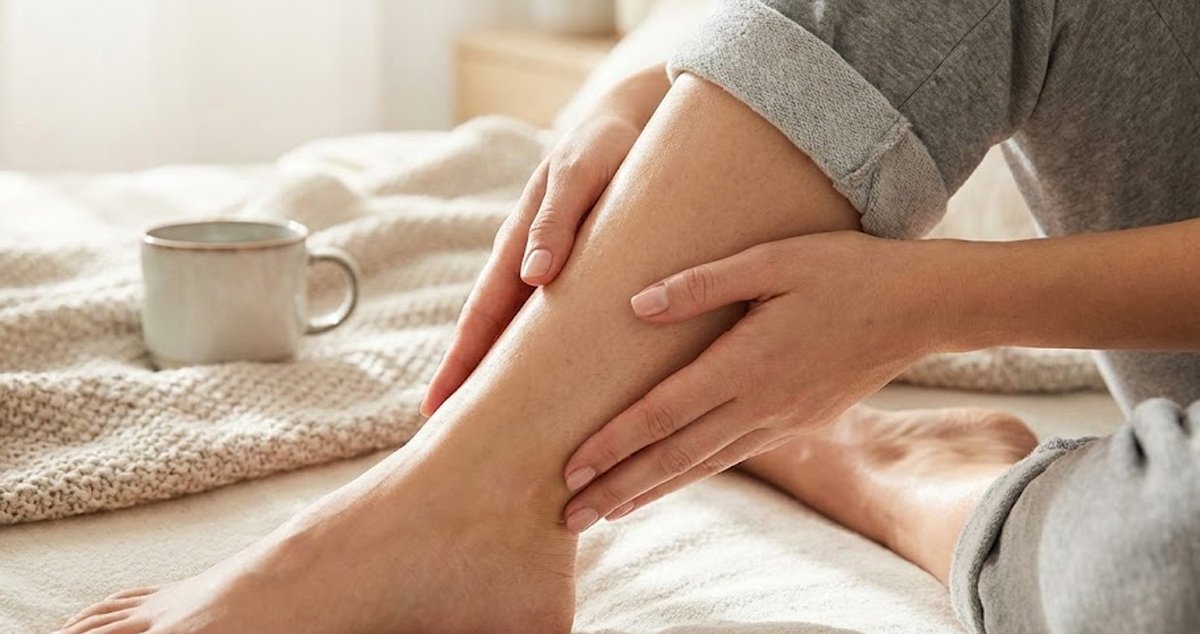
To address The Heavy Legs Sensation: Improving Circulation with Lymphatic Drainage, you need a specific technique. Lymphatic drainage is about skin stretching, not muscle kneading. The goal is to manually open the initial lymphatic capillaries and guide the fluid toward the lymph nodes where it can be processed.
Think of it like clearing a traffic jam. You don’t ram the cars from behind. You direct traffic at the front to clear the lane.
How It Works Physically
When you apply the correct rhythmic strokes, you increase the rate of lymph angion contraction. These are the tiny muscular units in the lymph vessels. Normally, they contract about six to ten times a minute. With proper manual drainage, you can ramp that up to twenty times a minute.
This clears the backlog. The fluid moves out of the interstitial spaces in your tissues and back into the bloodstream where your kidneys can filter it out. The result is immediate. The swelling goes down. The heaviness vanishes.
DIY Techniques vs. Professional Help
You don’t always need a therapist to fix this. You can do a significant amount of maintenance on yourself. However, technique is everything. If you rub your legs randomly, you are wasting your time.
The Sequence Matters
You never start at the feet. If the drain is clogged at the top, pushing fluid up from the bottom just adds pressure. You have to clear the proximal areas first.
-
Clear the Terminus: This is the area above your collarbones. Gentle pumping motions here open the main drain.
-
Wake up the Nodes: Stimulate the lymph nodes in your groin (inguinal nodes). This is the gateway for leg fluid.
-
Thighs First: Work on the upper leg, sweeping fluid upward toward the groin.
-
Calves Last: Only after the upper leg is clear do you move to the calves.
By respecting this order, you ensure The Heavy Legs Sensation: Improving Circulation with Lymphatic Drainage is actually effective. You are creating space for the fluid to move into.
The Role of Topicals and Oils
Friction is the enemy of lymphatic drainage. You need a glide that allows you to stretch the skin without sliding over it too quickly. While many people reach for standard lotions, the quality of what you put on your skin matters. Your skin is an organ. It absorbs what you apply.
If you are into natural regimens, you know that synthetic fillers are garbage. You want pure ingredients. While we are discussing body care, it is worth noting that using high-quality herbal products is a holistic habit. For instance, if you are looking for top-tier natural care, you can check out resources like Nature’s Crown Hair Oil for examples of potent herbal formulations. The principle remains the same whether it is your scalp or your legs: give the body natural tools, and it repairs itself.
Lifestyle Factors That Sabotage Circulation
You can do lymphatic drainage all day, but if your lifestyle is inflammatory, you are fighting a losing battle. Let’s look at the obvious culprits that make The Heavy Legs Sensation: Improving Circulation with Lymphatic Drainage necessary in the first place.
Sodium Intake
Salt holds water. If you eat processed food, you are retaining fluid. It is simple chemistry. Cut the sodium, and your kidneys will dump the excess water. You don’t need a diuretic pill; you need to stop eating junk.
Hydration Paradox
People with swelling often stop drinking water because they think it will make them puffier. This is backward thinking. When you are dehydrated, your body hoards water as a survival mechanism. Drink more water to signal to your body that it is safe to let go of the reserves.
The Sitting Disease
If you sit for six hours straight, you are kinking the hose. Your hip flexors tighten, restricting flow through the inguinal nodes. Stand up every hour. Do ankle pumps. Force the calf muscle to contract. That muscle is your secondary heart. Use it.
When Heaviness Means Something Else
Let’s be real for a second. Sometimes heavy legs aren’t just about lymph. They can be a warning sign. If one leg is significantly swollen and the other is fine, that is a red flag. It could be a DVT (Deep Vein Thrombosis).
If the skin is hot to the touch, red, or painful, stop reading this blog and go to a doctor. Lymphatic drainage is for congestion, not for acute infection or blood clots. Moving fluid around when you have an infection can spread it. Be smart. Know the difference between a sluggish system and a medical emergency.
Advanced Strategies for Circulation
If you are serious about The Heavy Legs Sensation: Improving Circulation with Lymphatic Drainage, you can combine manual techniques with other modalities.
-
Compression Therapy: This prevents the fluid from pooling back up after you have drained it. But don’t buy the cheap stuff. You need graduated compression that is tighter at the ankle and looser at the knee.
-
Inversion: Put your legs up the wall. Let gravity work for you for once. Ten minutes a day makes a difference.
-
Dry Brushing: This stimulates the surface lymphatics before you shower. Always brush toward the heart.
Integrating This into Your Routine
You do not need to overhaul your entire life. You just need to be consistent. The Heavy Legs Sensation: Improving Circulation with Lymphatic Drainage is a process, not a one-time event.
Start by doing five minutes of manual drainage before bed. It calms the nervous system and preps your legs for a night of repair. Combine that with a decent walk during the day. Walking is the most natural form of lymphatic pumping existence.
Don’t overcomplicate it. The body wants to heal. It wants to flow. Your job is simply to remove the obstacles.
Frequently Asked Questions
Is lymphatic drainage painful? No. If it hurts, you are doing it wrong. It should be a light, rhythmic touch. Pain causes muscles to guard and vessels to constrict, which defeats the purpose.
How often should I do it? For The Heavy Legs Sensation: Improving Circulation with Lymphatic Drainage, consistency beats intensity. Doing it yourself for ten minutes daily is better than getting a professional massage once a month.
Can I use a massage gun? Generally, no. Massage guns are for muscle recovery. They are too aggressive for the delicate lymphatic vessels and can actually cause them to collapse temporarily. Stick to your hands or specific pneumatic compression boots.
Does this help with cellulite? It helps with the appearance of cellulite. Cellulite is fat pushing through connective tissue. Fluid retention makes it look worse. Draining the fluid smooths the area, but it doesn’t remove the fat.
The Bottom Line
Living with heavy legs is a choice. You can accept the discomfort as a part of aging or working, or you can take control of your physiology. The Heavy Legs Sensation: Improving Circulation with Lymphatic Drainage is about understanding that your body is a hydraulic system. Keep the filters clean, keep the pump running, and the pressure will drop.
Don’t wait for the swelling to get painful. Start moving the fluid today. Your legs carry you through everything; the least you can do is lighten the load.