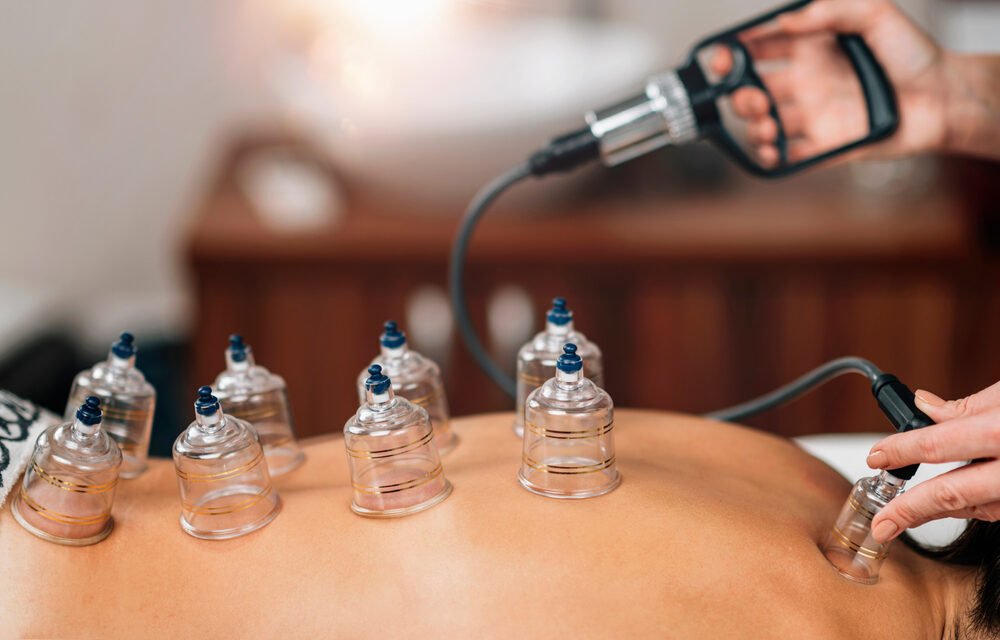
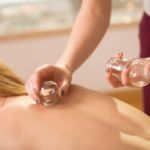
Cupping therapy encompasses a variety of techniques and methods, each of which is specifically designed to address the unique health concerns and requirements of the individual. Dry cupping, moist cupping, fire cupping, and massage cupping are the most frequently employed methods. Dry cupping is a technique that involves the creation of a vacuum within cups that are set on the skin. This process is intended to improve blood circulation and alleviate muscle tension. Wet cupping, also referred to as Hijama, involves a gentle skin incision prior to the application of the cups, which facilitates the removal of small quantities of blood and aids in detoxification. Fire cupping is a technique that employs heat to generate suction by momentarily igniting a flame within the cup before placing it on the skin, thereby providing deep tissue relief. Massage cupping is a distinctive method of deep-tissue massage that incorporates suction and movement. Practitioners are capable of customizing treatments to meet the unique requirements of their clients, as each method offers its own set of advantages.
Techniques and Methods




Your blog post did an excellent job of breaking down the various methods of cupping therapy. I especially appreciated the section on fire cupping—it’s a technique I’ve always been curious about but never fully understood until now. Keep up the great work!
Cupping therapy offers a fascinating approach to addressing various health concerns through different techniques. The detailed explanation of methods like dry cupping, wet cupping, and fire cupping provides valuable insight into their unique benefits. It’s impressive how practitioners tailor each treatment to meet individual needs, ensuring a personalized experience. I found the section on massage cupping particularly intriguing, as it combines suction with deep-tissue relief. How does one determine which cupping method is most suitable for their specific condition?
Cupping therapy is truly fascinating with its diverse methods tailored to individual needs. The explanation of dry cupping and its benefits for blood circulation was very informative. Fire cupping seems intense but effective for deep tissue relief, and I’m curious to try it myself. Wet cupping, particularly Hijama, sounds like a powerful detoxification method. How do practitioners decide which technique is best suited for a specific client?
This article provides a comprehensive overview of cupping therapy, highlighting its different techniques and their specific benefits. The explanation of fire cupping was particularly enlightening, as it clarified how heat is used to create suction for deep tissue relief. It’s impressive how practitioners can tailor treatments to individual needs, ensuring personalized care. How effective is cupping therapy for chronic pain compared to other alternative treatments?