
Cupping for Anxiety: How It Stimulates the Parasympathetic Nervous System
Let’s be real about anxiety. It’s not just worrying too much or feeling stressed before a meeting. It is a physiological state where your body’s alarm system is stuck in the “on” position. You can talk about your feelings until you are blue in the face, but if your nervous system thinks a tiger is chasing you, your body won’t relax. This is where physical interventions come into play, and why we need to talk about cupping for anxiety: how it stimulates the parasympathetic nervous system.
You have probably seen the photos of athletes or celebrities with purple circles on their backs. It looks intense, maybe even painful. But if you strip away the Instagram trendiness and the ancient mysticism often attached to it, cupping is a mechanical tool with a very specific physiological impact. It’s not magic. It’s biological engineering for your nervous system.
If you are tired of just managing symptoms and want to understand how to physically flip the switch on your stress response, keep reading. We are going to break down the mechanics of how suction can force your body to calm down.
The Mechanism: Reversing the Pressure
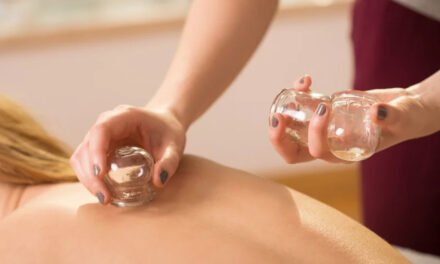
To understand why cupping works for anxiety, you have to forget what you know about massage. Standard massage is compressive; it pushes tissues together. Cupping is decompressive. It uses negative pressure (suction) to lift skin, muscle, and fascia upwards.
This might seem like a minor distinction, but to your body, it’s everything.
When you are anxious, your body physically contracts. You armor up. Your shoulders hike up to your ears, your chest tightens, and your fascia—the connective tissue wrapping everything in your body, becomes dense and sticky. This physical tension feeds back into your brain, confirming that yes, there is a threat.
Cupping physically forcibly lifts that armor. By creating space in the tissues, it increases blood flow and oxygenation to areas starved of both due to chronic tension. But the real magic happens in how this mechanical action talks to your brain.
The Nervous System Showdown: Sympathetic vs. Parasympathetic
You cannot understand anxiety relief without understanding the autonomic nervous system (ANS). Think of the ANS as the operating system running in the background of your body controlling things you don’t think about, like heart rate, digestion, and respiratory rate.
It has two main branches operating in a constant balancing act:
-
The Sympathetic Nervous System (SNS): This is your “fight or flight” mode. When triggered by stress (or chronic anxiety), it dumps cortisol and adrenaline into your system. Your heart rate speeds up, your muscles tense, and digestion shuts down. It’s great if you need to outrun a bear. It’s disastrous if you are just trying to answer emails.
-
The Parasympathetic Nervous System (PNS): This is “rest and digest.” It’s the brake pedal. When activated, your heart rate slows, your muscles relax, and your body focuses on recovery and repair.
The problem with chronic anxiety is that your SNS is stuck on overdrive. You are cruising down the highway in second gear with your foot floored on the gas pedal. You cannot just “think” your way into the parasympathetic state. You need a physical override.
Here is the thing: the concept of cupping for anxiety: how it stimulates the parasympathetic nervous system is based on providing that physical override.
How Cupping Stimulates the Parasympathetic Nervous System
This is the core of the issue. How does putting cups on your back translate to mental calm? It comes down to sensory input and the vagus nerve.
Your skin is not just a wrapper; it is your largest sensory organ. It is packed with nerve endings and receptors that constantly send data to your brain. When you apply the negative pressure of cupping, you are flooding these receptors with novel sensation.
The Vagus Nerve Connection
The superstar of the parasympathetic nervous system is the vagus nerve. It wanders from your brainstem down through your neck, chest, and abdomen, innervating almost every major organ. It is the primary data highway for telling your body it is safe to relax.
Depending on where the cups are placed—particularly on the upper back, neck, and along the paraspinal muscles—cupping can indirectly influence the vagus nerve. The mechanical stimulation of the skin and underlying tissues in these specific zones sends signals to the brain that interrupt the sympathetic panic loop.
It shifts the body from alarm mode to safety mode.
Fascial Release and Sensory Downregulation
Furthermore, anxiety gets trapped in the fascia. When fascia is tight, it compresses nerves and blood vessels, keeping the sympathetic nervous system agitated. The suction of cupping stretches this fascia in a way manual massage cannot.
By decompressing these tissues, you are essentially taking your foot off the gas pedal. The intense, sometimes strange sensation of the suction acts as a “pattern interrupt” for your nervous system. The brain is forced to pay attention to this new sensation on the back, withdrawing resources from the anxiety loop in your head. As the suction holds, the body realizes this intense sensation isn’t a threat, and it triggers a relaxation response.
[Link to internal article on somatic experiencing for anxiety]
Beyond the Nerves: The Physical Release
While the neurological impact is primary, we cannot ignore the purely mechanical benefits. Anxiety is exhausting. Holding your muscles in a state of semi-contraction all day burns energy and creates pain.
Cupping rapidly increases local blood circulation. When you are stuck in “fight or flight,” blood is shunted away from your core and toward your limbs (so you can run). Cupping on the back and torso helps draw blood back to the center, signaling a return to a resting state.
This flood of fresh blood brings oxygen and nutrients to chronically tight muscles, allowing them to finally let go. The relief of physical pain—that constant ache between your shoulder blades or the tension in your neck—removes a major stressor that feeds the anxiety cycle. When your body feels less restricted, your mind follows suit.
It’s worth noting that holistic self-care often involves multiple avenues of soothing the body. While cupping handles the deep tissue and nervous system, other rituals can complement this downregulation. For example, integrating something tactile and soothing like Nature’s Crown Hair Oil into a post-session routine can reinforce that sense of bodily safety and care. It’s about stacking the deck in favor of relaxation.
What to Expect in a Session for Anxiety
If you are walking into a cupping session specifically for anxiety, it shouldn’t look the same as a session for a torn rotator cuff.
The practitioner will likely focus on the upper back, along the spine, and the back of the neck. These are the areas where we hold the most “armoring” tension and where the nervous system influence is strongest.
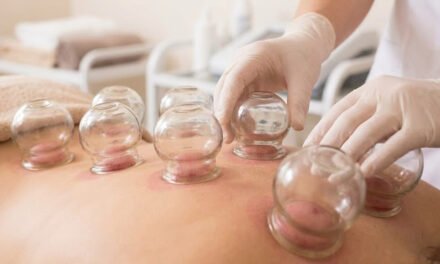
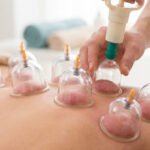
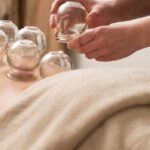
They might use “running cupping,” where oil is applied and the cups are moved around the back. This feels more like a deeply intense massage and is excellent for general downregulation. They might also use stationary dry cupping, leaving the cups in place for 5 to 15 minutes.
Does it hurt? It shouldn’t be painful, but it will be intense. It feels like a very strong pinching or pulling sensation. Most people find that after the initial minute or two, the sensation becomes deeply relaxing as the parasympathetic system kicks in. Many people actually fall asleep on the table once the cups are set.
The Marks: Let’s Clear This Up
We have to talk about the marks. You will likely walk out looking like you fought an octopus.
These are not bruises in the traditional sense. A bruise is trauma caused by impact breaking capillaries. The marks from cupping (called petechiae or ecchymosis) are caused by suction drawing old, non-circulating blood and cellular debris from deep in the tissue up to the surface.
Think of it as dredging a stagnant riverbed. The darker the marks, the more stagnation was present in that area. They usually fade within a week or so. They are badges of tension leaving your body, not injuries.
FAQs About Cupping for Anxiety
Is cupping a cure for anxiety disorders?
No. Let’s be crystal clear. Cupping is a tool to manage physiological arousal. It will not resolve past trauma or change your thought patterns. It resets your physical baseline so you can do that other work more effectively. It’s an adjunct therapy, not a replacement for professional mental health treatment.
How long do the calming effects last?
It varies greatly. Some people feel a shift that lasts for days; for others, it’s a few hours of relief. Like exercise, the effects are cumulative. Regular sessions tend to train the nervous system to access the parasympathetic state more easily over time.
Is it safe for everyone?
Generally yes, but there are exceptions. If you have bleeding disorders, skin infections, or severe cardiac issues, you need to consult a doctor first. Always see a qualified practitioner, typically a licensed acupuncturist or massage therapist certified in cupping.
Why do I feel emotional after a session?
This is very common. We store emotions somatically (in the body). When you release deep physical tension, you often release the emotions attached to it. You might feel weepy, exhausted, or incredibly energized afterward. It’s a normal part of the processing.
The Bottom Line
Anxiety is complex, and anyone promising a simple fix is lying to you. But ignoring the physical reality of anxiety—the stuck sympathetic nervous system—is a massive mistake.
Understanding cupping for anxiety and how it stimulates the parasympathetic nervous system gives you another weapon in your arsenal. It’s a way to stop fighting your own physiology and use mechanics to force a reset. Sometimes your brain needs your body to tell it that the danger has passed. Cupping is a very loud megaphone for delivering that message.