Natural Joint Support: Turmeric and Ginger for Arthritis Relief! Does It Actually Work?
Natural Joint Support: Turmeric and Ginger for Arthritis Relief is what you’re searching for because you are tired. You are tired of the stiffness, the morning aches that make getting out of bed feel like a negotiation, and the endless cycle of NSAIDs that wreak havoc on your stomach.
Let’s be real for a second. Chronic pain changes you. It narrows your world. You stop doing the things you love because you’re calculating the “cost” in pain you’ll pay later. While modern medicine has its place, it often treats the symptom, not the fire burning underneath. That fire is inflammation.
Turmeric and ginger aren’t magic wands. If your doctor told you bone-on-bone friction can be cured by a latte, they lied. But if you are looking for a legitimate, science-backed way to lower systemic inflammation and dial down the volume of your pain, these two roots are the heavy hitters you need to understand.
Here is the thing: most people use them wrong. They sprinkle a little dust on a curry and wonder why they don’t feel like an Olympian. We are going to fix that.
The Root of the Problem: Inflammation
Before we talk about the solution, you need to understand the enemy. Arthritis—whether it’s Osteoarthritis (wear and tear) or Rheumatoid Arthritis (autoimmune)—is fueled by inflammation.
Your body thinks it’s under attack. It sends out inflammatory markers to “fix” the issue, but in the case of arthritis, the switch gets stuck in the “on” position. This chronic inflammation degrades cartilage and swells the joint lining.
Standard painkillers (NSAIDs like Ibuprofen) work by blocking the enzymes that cause inflammation. Turmeric and ginger do something very similar, but they do it without chewing a hole in your stomach lining.
Turmeric: The Heavy lifter
Turmeric gets all the hype, and for once, it’s actually warranted. The active compound here is curcumin.
Curcumin is a powerhouse. Studies have shown it can block NF-kB, a molecule that travels into the nuclei of your cells and turns on genes related to inflammation. In plain English? It tells your cells to calm down.
The Bioavailability Trap
Here is where most people fail. You can eat turmeric root until you turn yellow, and your joints might still hurt. Why? Because curcumin is notoriously hard for your body to absorb. It enters your bloodstream, your liver looks at it, and flushes it out almost immediately.
To make it work, you need a catalyst.
-
Black Pepper (Piperine): This is non-negotiable. Piperine enhances the absorption of curcumin by up to 2,000%. If your supplement doesn’t have black pepper extract (Bioperine), throw it in the trash.
-
Fat: Curcumin is fat-soluble. You need to consume it with a healthy fat like coconut oil, olive oil, or avocado to get it into your system.
Ginger: The Anti-Inflammatory Veteran
If turmeric is the star, ginger is the reliable veteran. It contains gingerol and shogaol, compounds that inhibit the production of inflammatory chemicals called leukotrienes.
Ginger works differently than turmeric, which is why they are perfect partners. Ginger is also an analgesic—it acts directly on pain receptors. A 2001 study of 247 patients with osteoarthritis of the knee showed that those who took ginger extract had significantly less pain and required less pain medication than the control group.
Plus, ginger settles the stomach. If you’ve been living on painkillers, your gut is likely compromised. Ginger helps repair that damage while fighting your joint pain.
Natural Joint Support: Turmeric and Ginger for Arthritis Relief in Action
So, how do you actually use Natural Joint Support: Turmeric and Ginger for Arthritis Relief in your daily life? You have to be consistent. This isn’t a “take it once and feel better” situation. It requires a buildup in your system.
1. The “Golden Paste” Method
This is the most effective way to consume them cheaply and effectively.
-
Ingredients: ½ cup turmeric powder, 1 cup water, 1 tsp black pepper, ¼ cup coconut oil.
-
Method: Simmer turmeric and water until it forms a thick paste (about 7 minutes). Take off heat. Stir in the pepper and oil.
-
Usage: Take a teaspoon a day. Put it in smoothies, oatmeal, or just swallow it. It tastes intense, but it works.
2. High-Potency Supplements
If you hate the taste, buy a supplement. But be smart. Look for:
-
Standardized to 95% curcuminoids.
-
Includes Piperine or black pepper extract.
-
Third-party tested for heavy metals (roots soak up everything in the soil, including lead).
3. Fresh Tea Infusions
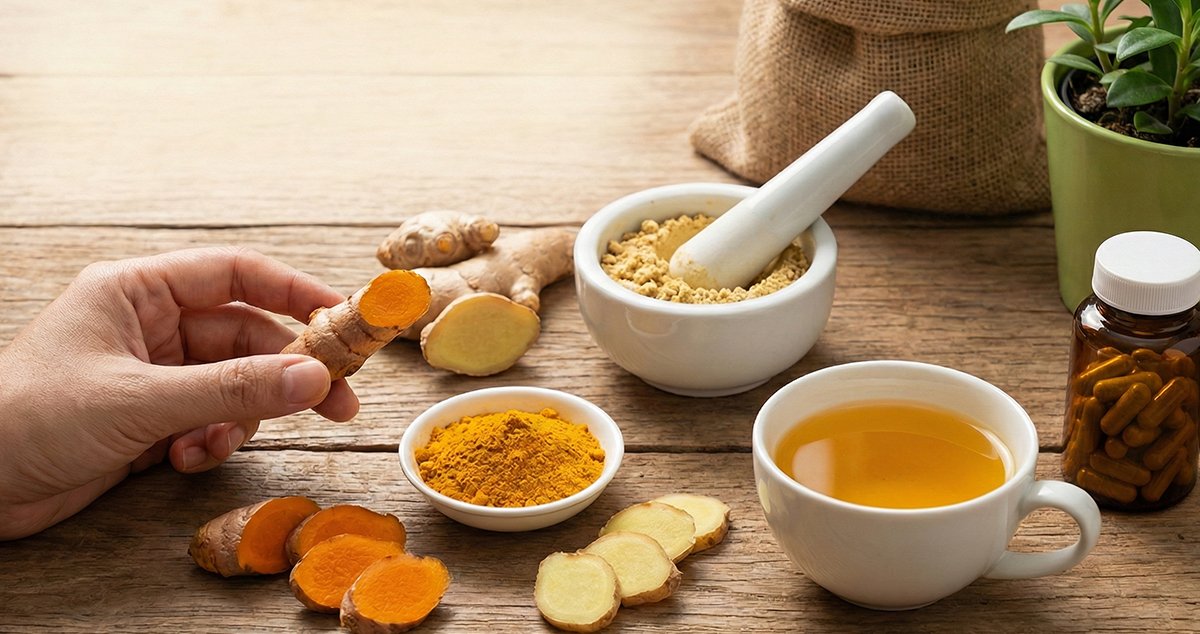
Grate fresh turmeric and ginger root into boiling water. Let it steep for 15 minutes. Add lemon and honey. This is less potent than the paste or pills, but it’s a great maintenance habit.
The Holistic Reality: You Can’t Supplement a Bad Lifestyle
You cannot out-supplement a bad diet or a sedentary life. If you are chugging turmeric tea but eating processed sugar and sitting on the couch for 10 hours a day, you are fighting a losing battle.
Movement is Medicine
Motion is lotion. Synovial fluid—the oil in your joints—only circulates when you move. If you stop moving because it hurts, the joint dries out, and it hurts more. It’s a vicious cycle. Walk, swim, stretch. Do whatever you can to keep the fluid moving.
Self-Care isn’t Selfish, It’s Maintenance
When you are in pain, you tend to neglect your body. You stop caring about your skin, your hair, or your general well-being because all your energy goes into managing the pain.
Breaking that psychological loop is huge. Taking time to massage your joints or care for your skin sends a signal to your brain that your body is still worth caring for.
-
Massage: Using oils to massage stiff joints increases blood flow. If you’re looking for natural options to incorporate into a self-care routine, consider products like Nature’s Crown Hair Oil. While it’s designed for hair, the act of applying oils and massaging the scalp or body can be incredibly grounding and stress-relieving. Stress lowers your pain threshold. Lower the stress, lower the pain.
-
Skin Hydration: Chronic inflammation can sometimes manifest in skin issues or just general dryness from medication dehydration. Keeping your skin barrier healthy is part of the package. A product like Rice Milk Moisturising Lotion can be excellent for soothing dry skin. When you feel physically comfortable in your skin, your perception of joint pain often decreases.
The Dosages: What Actually Moves the Needle?
Stop guessing. Here is what the research suggests for therapeutic effects.
-
Turmeric: The Arthritis Foundation suggests 400–600 mg of turmeric capsules 3 times per day, or 0.5–1 g of powdered root up to 3 g per day.
-
Ginger: Research suggests 250 mg of ginger extract 3 or 4 times daily. Do not exceed 4 grams a day or you might get heartburn.
Potential Side Effects (The “Warning Label”)
I’m not a doctor, and I’m definitely not your doctor. While these roots are natural, “natural” doesn’t mean “harmless.” Arsenic is natural.
-
Blood Thinners: Both turmeric and ginger have mild blood-thinning properties. If you are on Warfarin, Aspirin, or Plavix, talk to your doctor. You don’t want to thin your blood too much.
-
Gallstones: If you have gallstones or bile duct obstruction, turmeric can cause contractions in the gallbladder. That hurts. Avoid it.
-
Surgery: Stop taking these two weeks before any scheduled surgery to avoid bleeding risks.
FAQs: No-Nonsense Answers
Q: How long does it take to see results? A: It’s not Tylenol. It takes time. Most studies show significant relief starts appearing between 4 to 8 weeks of consistent daily use. If you quit after week one, you wasted your time.
Q: Fresh root or powder? A: Powder is more concentrated. You would have to eat a massive amount of fresh turmeric root to get the same amount of curcumin found in a concentrated powder or extract. Fresh is great for cooking and maintenance; powder/extract is for therapy.
Q: Can I just drink ginger ale? A: Absolutely not. Most ginger ale is carbonated sugar water with artificial flavoring. Sugar causes inflammation. You are literally drinking arthritis fuel. Look for real ginger beer with sediment at the bottom, or make your own tea.
Q: Is “Natural Joint Support: Turmeric and Ginger for Arthritis Relief” better than medication? A: It’s not about “better.” It’s about side effects. NSAIDs work faster but have higher risks for long-term organ damage. Turmeric and ginger work slower but are safer for long-term management. Many people use them to lower their dosage of pharmaceutical painkillers, not necessarily replace them 100%.
What to Look for When Buying
The supplement industry is unregulated. It is the Wild West out there. Companies will sell you sawdust if they can get away with it.
-
Certification: Look for GMP (Good Manufacturing Practice) certified stamps.
-
Color: Turmeric powder should be a deep, vibrant orange-gold. If it’s pale yellow, it’s old or cut with fillers.
-
Smell: It should smell earthy, peppery, and strong. No smell means no potency.
Final Thoughts
Dealing with arthritis is a grind. It wears you down physically and mentally. Relying on Natural Joint Support: Turmeric and Ginger for Arthritis Relief is a smart, strategic move to reclaim some control over your body.
But let’s be clear: this works best when you attack inflammation from all angles. Clean up your diet, move your body even when you don’t want to, and treat these roots as powerful tools in your arsenal, not magic pills.
Start today. Go buy a high-quality supplement or make the golden paste. Give it 60 days. Your joints will tell you if it’s working.